
 , Cleaning
 , Industry
 , Nautical
 , Stone


PRESSURE BASE
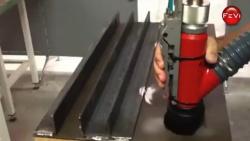
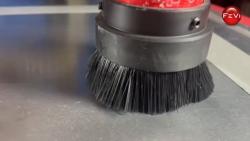
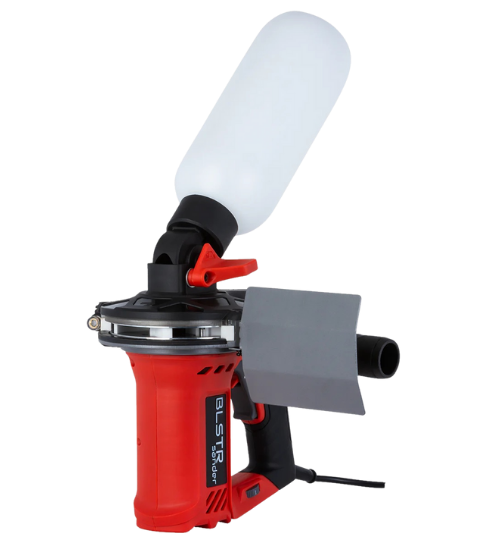
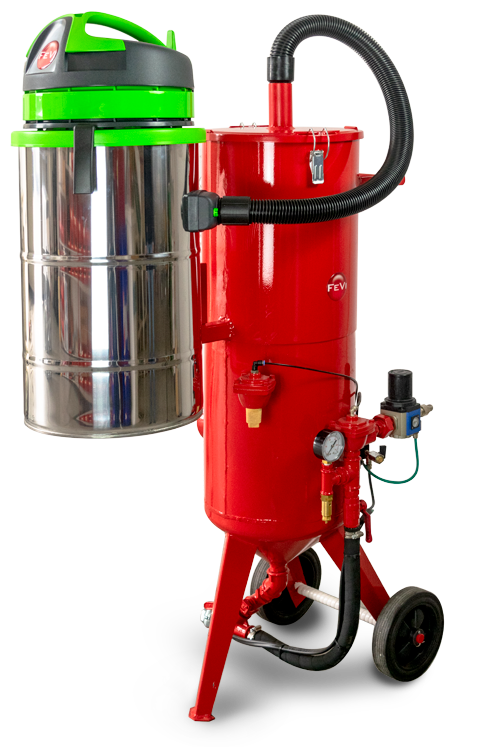
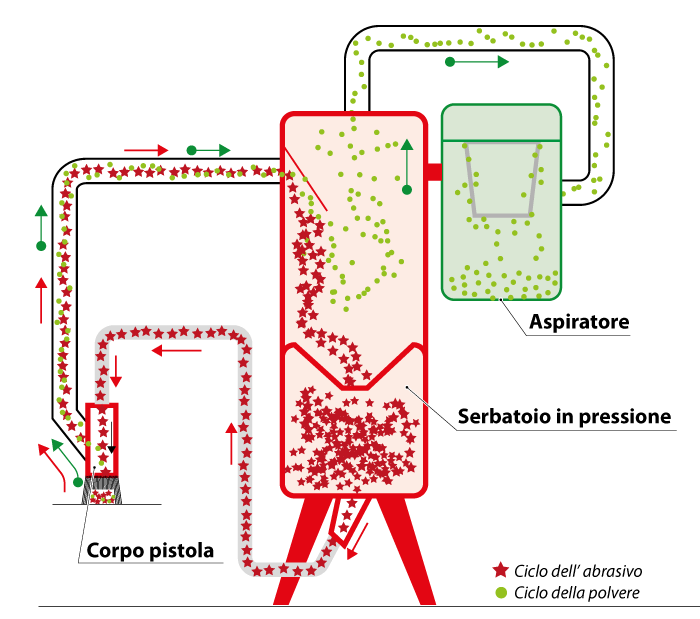
The PRESSURE BASE abrasive recovery sandblaster operates through a system composed of a sandblasting unit, a gun body with front brush and an extraction unit.
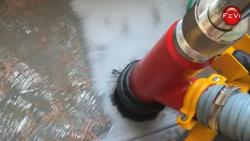
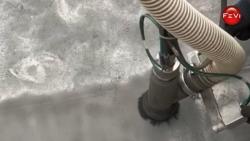
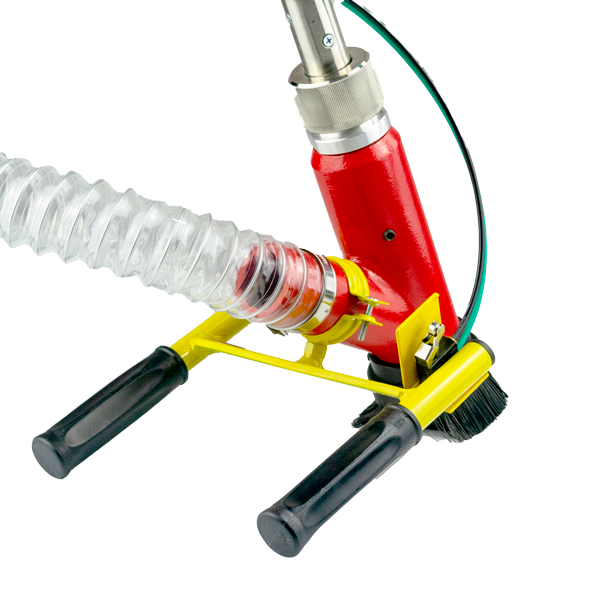
During operation, the gun works in contact with the surface. The front brush helps contain the working area, while the extraction unit recovers the used abrasive and the dust generated during material removal.
The recovered material is conveyed to the separation system, where the reusable abrasive is separated from fine particles and processing waste.
This makes it possible to extend the abrasive usage cycle, reduce waste and improve operational management during sandblasting.
The cartridge filter with semi-automatic shaking system helps maintain more efficient filtration by discharging the accumulated dust into the dedicated container.
Watch how the abrasive recovery system works during sandblasting.
Why choose PRESSURE BASE
PRESSURE BASE is a suitable solution when a professional sandblaster is required for targeted operations, where it is not necessary to treat large open surfaces but it is essential to work with precision and with greater control of the operating area.
It is particularly useful in indoor environments, workshops, production departments, industrial maintenance, work on metal components, architectural elements, stone surfaces, marble, granite, glass, steel and parts that require localized treatment.
Its main value lies in the ability to combine sandblasting, abrasive recovery and extraction in a single system, reducing subsequent material collection operations and limiting the need for extensive protection of the surrounding environment.
Applications of the PRESSURE BASE abrasive recovery sandblaster
-
Cleaning and finishing of welds on stainless steel
PRESSURE BASE can be used on weld seams, stainless steel parts and metal components that require oxidation removal or localized finishing.
-
Lettering, decorations and localized work
Suitable for creating lettering, decorations and controlled work on marble, glass, crystal, wood, steel and ABS.
-
Sandblasting of cylinders and mechanical components
It can be used after mechanical machining or turning operations to work on cylinders and metal components.
-
Localized work on metal components
Suitable for targeted sandblasting on weld seams, oxidized areas or zones requiring localized preparation.
-
Architectural details in stone, marble and granite
It can be used on stairways, balconies and architectural elements where greater control of the working area is required.
-
Localized paint stripping on metal surfaces
Useful in industrial, marine and maintenance applications when free-blasting sandblasting is not practical or would require extensive protective measures.
Advantages of the PRESSURE BASE sandblaster
Abrasive recovery
The system recovers the abrasive used during operation, helping to reduce waste and material dispersion.
Dust separation
The cyclone separates reusable abrasive from dust and waste generated during processing.
Less area preparation
Compared to free-blasting sandblasting, PRESSURE BASE can reduce the need for shielding and collection of dispersed abrasive.
Localized operation
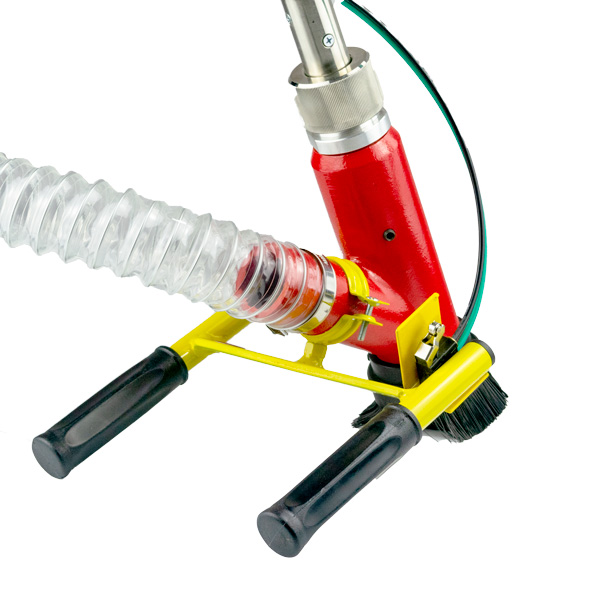
The gun with front brush allows contact work, concentrating the operation only on the area involved.
Greater operational control
The remote control on the handle improves practicality and management of the process directly from the gun.
More efficient filter management
The filter cartridge shaking system helps maintain stable efficiency of the extraction unit.
Main components of PRESSURE BASE
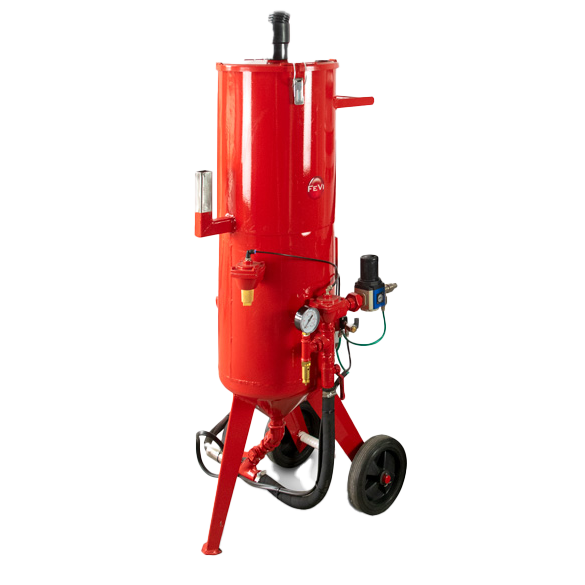
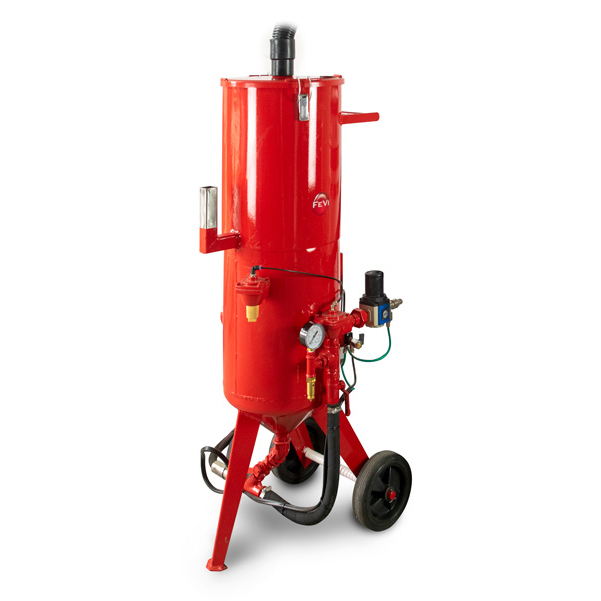
- Sandblasting unit
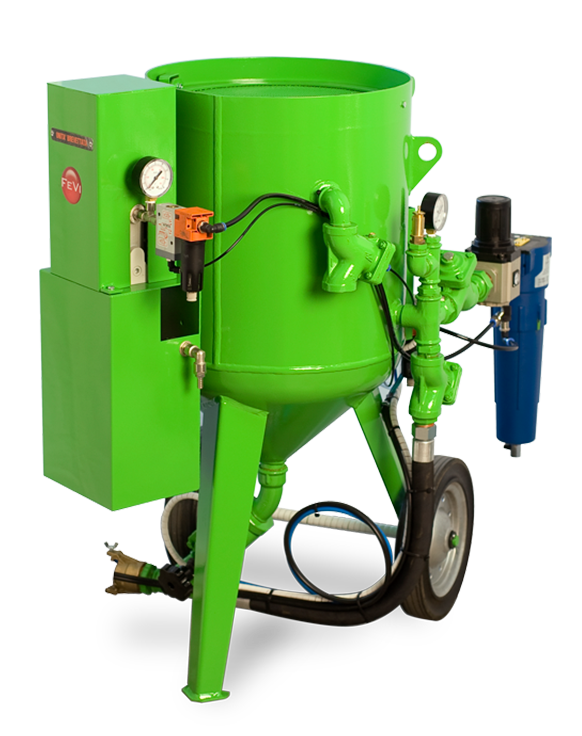
24-litre pressure tank common to the FEVI Pressure range. - Gun body with front brush
System designed to work in contact with the surface, supporting abrasive recovery and dust containment. - Extraction unit
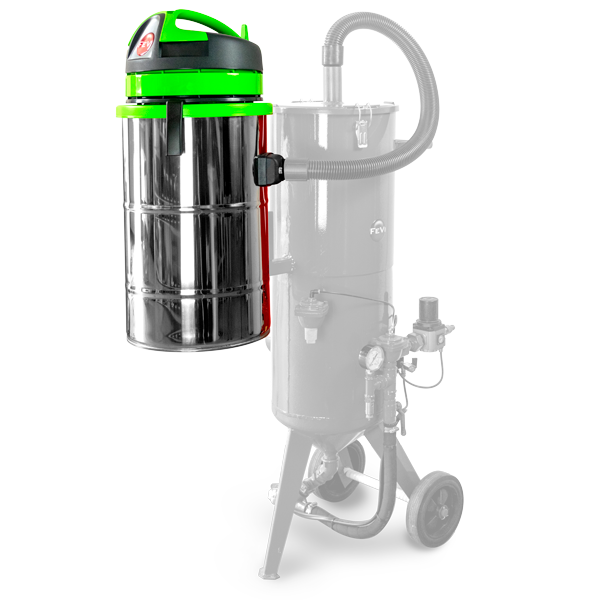
Recovers abrasive and dust during operation, helping to keep the working area cleaner. - Separation cyclone
Separates reusable abrasive, fine dust and processing waste. - Cartridge filter with semi-automatic shaking system
Helps keep the extraction system more efficient by discharging accumulated dust.
The Pressure BASE consists of:
Usage recommendations
To obtain the best result with PRESSURE BASE, it is important to choose the correct abrasive according to the material to be treated and the required level of aggressiveness.
The front brush must work correctly in contact with the surface, because abrasive recovery and dust containment also depend on the position of the gun during the operation.
It is advisable to periodically check the nozzle, brush, hoses, filter, seals and components subject to wear.
When working on irregular surfaces, corners or complex geometries, it is useful to check in advance that the brush adheres properly to the surface.
FAQ about the PRESSURE BASE abrasive recovery sandblaster
What is an abrasive recovery sandblaster used for?
Read the answer
It is used to perform localized sandblasting or shot blasting while recovering the abrasive used and extracting the dust generated during the process.
Is PRESSURE BASE suitable for working indoors?
Read the answer
Yes, it is suitable for localized operations where free-blasting sandblasting would be less practical or would require extensive shielding.
Which materials can be treated with PRESSURE BASE?
Read the answer
It can be used on metal, stainless steel, stone, marble, granite, glass, wood and other materials compatible with localized sandblasting.
What is the difference between an abrasive recovery sandblaster and a free-blasting sandblaster?
Read the answer
A free-blasting sandblaster disperses abrasive into the environment, while an abrasive recovery sandblaster works with a contact head that recovers abrasive and dust during the operation.
Does PRESSURE BASE fully recover the abrasive?
Read the answer
The machine is designed to recover the abrasive during operation. Its effectiveness depends on the surface, the position of the brush and the condition of components subject to wear.