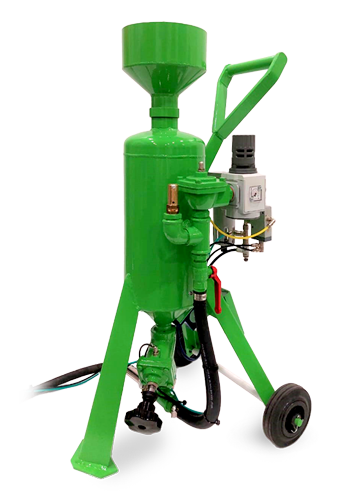
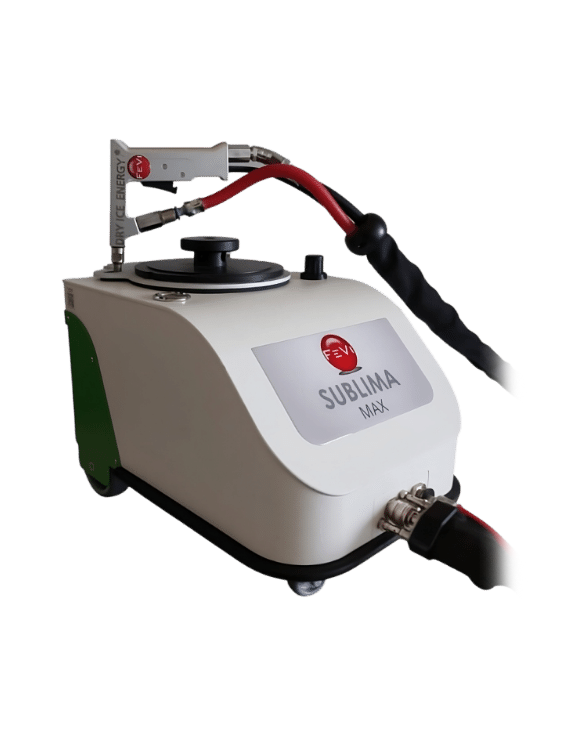
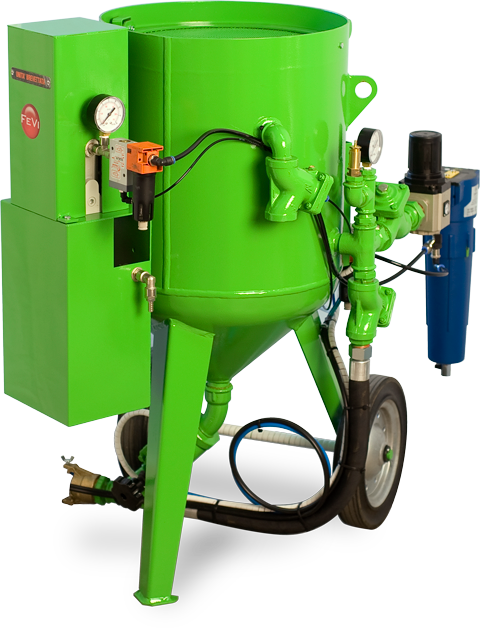
 , Idrosandblasters
 , Graffiti removal
 , Facades Cleaning
 , Conservative Cleaning
 , Cleaning
 , Industry
 , Nautical
 , Stone
 , Bodywork


WATER BLAST
WATER BLAST was created to meet one of the most important requirements in free-blasting sandblasting: reducing dust without sacrificing the abrasive removal capability.
In traditional sandblasting, the compressed air flow projects the abrasive onto the surface and can generate significant dust dispersion, especially when working on paint, rust, scale, old coatings, concrete, bricks, stone or oxidized metal surfaces.
With WATER BLAST, the abrasive is moistened before exiting. The grains gain greater specific weight, tend to disperse less in the air and maintain good impact capability on the surface.
The result is a more controlled sandblasting process, better suited to job sites, outdoor areas, industrial maintenance, façades, metal structures, construction surfaces, marine applications and operations where dust containment is a key factor.
WATER BLAST is therefore suitable for those looking for an intermediate solution between traditional dry sandblasting and high water-consumption wet blasting systems: it works with a limited amount of water, reduces dust lifting and allows the operator to adjust the flow according to the type of operation.
Who the WATER BLAST sandblaster is suitable for
WATER BLAST is suitable for companies, craftsmen, construction firms, maintenance operators, shipyards and professional users who need to perform free-blasting sandblasting while reducing dust dispersion.
- Construction companies working on façades, concrete, bricks, stone and mineral surfaces
- Industrial maintenance companies that need to remove rust, paint and scale
- Shipyards and marine operators working on hulls, keels, metal parts and painted surfaces
- Petrochemical, plant engineering and maintenance companies working on tanks, pipelines and structures
- Operators who need to prepare metal surfaces before painting or protective treatments
- Professionals looking for a more manageable sandblaster than systems with heavy dust dispersion
- Users who want to reduce water consumption compared to more invasive washing or wet blasting systems
Applications of the WATER BLAST water sandblaster
-
Construction and façades
WATER BLAST can be used for operations on façades, concrete, bricks, stone, mineral surfaces and outdoor areas where dust generated by sandblasting is an operational issue.
It is suitable for removing residues, old coatings, scale, persistent dirt and deteriorated surface materials by selecting the abrasive and pressure according to the substrate to be treated.
-
Industrial maintenance
In industrial environments, WATER BLAST is useful for treating machinery, metal structures, plants, metalwork, supports, tanks, pipes and parts subject to oxidation.
Pre-wetting the abrasive helps contain dust lifting, making the operation more manageable in contexts where dry sandblasting may be more difficult to control.
-
Marine and shipyard applications
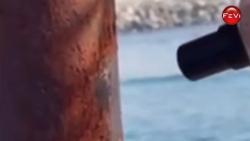
In the marine sector, WATER BLAST is suitable for operations on keels, hulls, painted surfaces, metal parts, oxidized supports and components to be prepared before new treatments.
The system is useful when rust, paint, residues and old surface layers need to be removed while reducing the dispersion of dust produced during the process.
-
Petrochemical and plant engineering industry
WATER BLAST can be used for maintenance operations on tanks, infrastructure, pipelines and industrial structures.
In these contexts, dust management is particularly important because it affects safety, visibility, order in the working area and surface preparation.
-
Industrial bodywork and metal surfaces
WATER BLAST can be used to remove rust, paint, oxidation and coatings from metal surfaces, frames, structural parts and components to be restored.
The presence of water in the mixture helps reduce dust lifting while maintaining good abrasive action.
-
Stone, natural stone and mineral surfaces
On stone, concrete, bricks and natural stone surfaces, WATER BLAST allows controlled treatments by adjusting abrasive, pressure and water quantity.
On delicate or valuable surfaces, preliminary tests should always be carried out using conservative parameters.
Operational strengths of WATER BLAST
Reduced dust lifting
The main advantage of WATER BLAST is the ability to moisten the abrasive before it exits, reducing the dust generated by the air jet and by the operation on the surface.
This feature is particularly useful on job sites, outdoor maintenance operations, façades, marine applications and industrial work where dust dispersion must be managed with greater attention.
Lower water consumption than traditional systems
WATER BLAST uses a limited amount of water compared to a standard pressure washer.
The FEVI page indicates a consumption of approximately 2 litres per minute, compared to much higher values typical of some traditional washing systems.
This helps avoid excessive flooding of the working area and makes the system more suitable for operations where dust needs to be suppressed without turning the job site into an area saturated with water.
Water adjustment directly from the working point
The operator can adjust the amount of water according to the type of surface, the abrasive used and the level of dust produced.
This adjustment is important because not all operations require the same degree of moistening: some surfaces require greater containment, while others need a drier mixture to maintain stronger abrasive power.
Good removal capability
The moistened abrasive maintains high impact capability on the surface.
The wet grain tends to disperse less in the air and can increase its impact force compared to a very light, dry abrasive.
This helps remove rust, paint, scale and old coatings.
Reduced compressed air consumption
The FEVI page indicates a possible reduction in compressed air consumption proportional to the increase in the amount of water in the air-abrasive mixture, up to 25%.
This aspect must always be assessed according to nozzle, pressure, abrasive, compressor and type of operation, but it represents an interesting advantage for professional work.
Difference compared to standard wet blasting
WATER BLAST should not be confused with classic Venturi wet blasting.
The FEVI page highlights that traditional wet blasting generates a mixture largely composed of water, while WATER BLAST works by pre-wetting the abrasive, maintaining greater continuity and control of the air-water-abrasive mixture.
Better management of the working area
By reducing dust lifting and limiting water input, WATER BLAST helps the operator work in a more controllable job site compared to completely open dry sandblasting or very water-rich wet blasting.
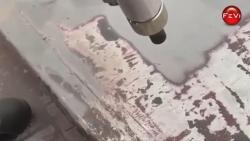
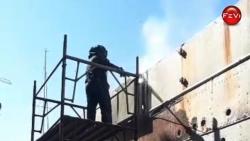
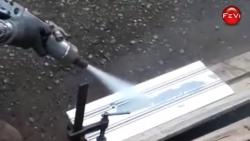
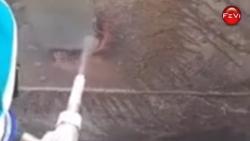
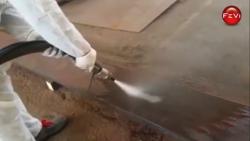
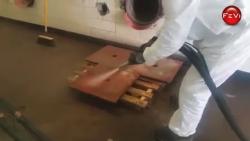
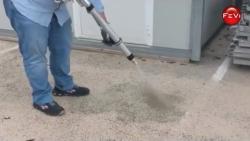
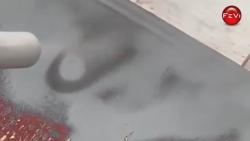
Watch WATER BLAST during sandblasting operations.
How the WATER BLAST system works
WATER BLAST operation is based on three stages:
-
Compressed air carries the abrasive towards the exit point.
-
Water is introduced into the mixture in a controlled way.
-
The moistened abrasive is projected onto the surface to be treated.
This sequence makes it possible to obtain an air-water-abrasive mixture that is more suitable for containing dust lifting during operation.
The system can be supplied through a connection to the water mains or through a water tank, depending on the operating conditions of the job site.
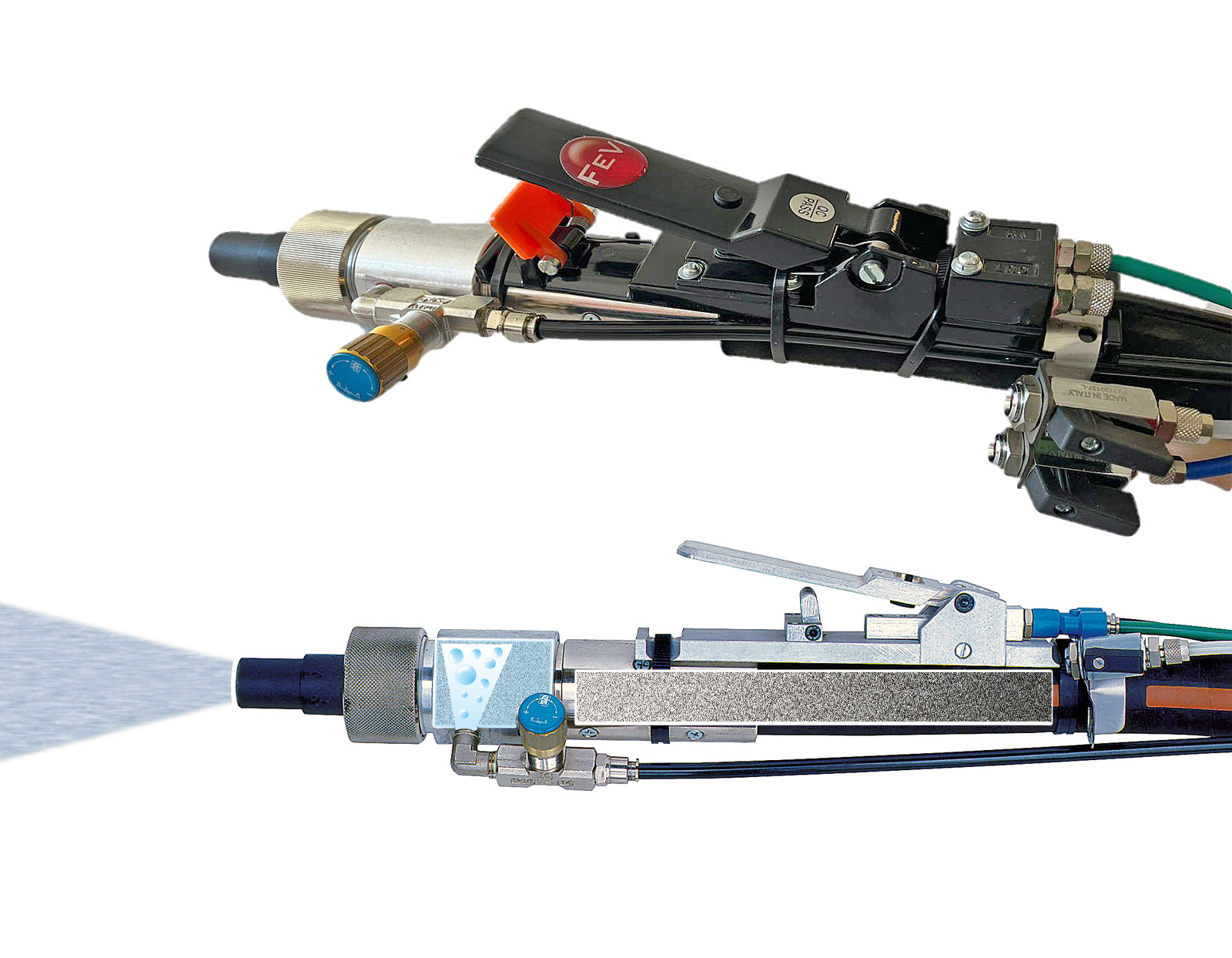
Main components of the WATER BLAST sandblaster
-
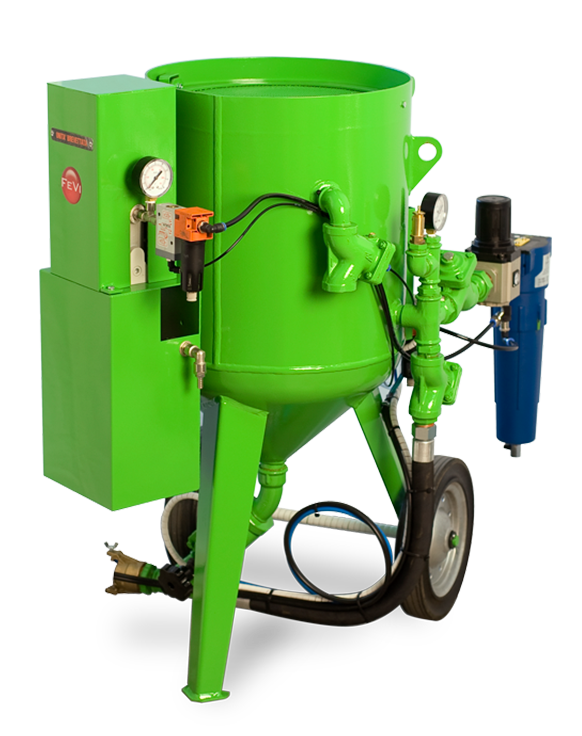
Free-blasting sandblasting unit
The base of the system is a professional free-blasting sandblaster designed to project abrasive onto the surface using compressed air.
The choice of pressure, nozzle and abrasive directly affects removal speed, the finish obtained and overall consumption.
-
Abrasive moistening system
The moistening unit allows water to be introduced into the air-abrasive mixture.
This is the element that distinguishes WATER BLAST from a traditional dry sandblaster: water is not used as the main washing medium but as an element for dust suppression and jet control.
-
Water flow adjustment
The system allows the operator to modulate the amount of water during operation.
Correct adjustment helps avoid both a mixture that is too dry, which would generate more dust, and a mixture that is too wet, which could unnecessarily increase liquid residues and water consumption.
-
Water supply from mains or tank
WATER BLAST can be supplied through a connection to the water mains or, when necessary, through a containment tank.
This flexibility makes the system usable on job sites, outdoor areas, workshops, yards and zones where water availability may vary.
-
Automatic water flow shut-off
FEVI indicates that the water flow stops automatically when the sandblaster stops.
This function is useful for reducing waste and making the system more practical during operating pauses.
Difference between WATER BLAST, dry sandblasting and wet blasting
Compared to dry sandblasting
Dry sandblasting offers strong abrasive capability but can generate a high amount of dust.
WATER BLAST maintains the principle of abrasive sandblasting but introduces water into the mixture to reduce dust lifting and make the process more controllable.
Compared to standard wet blasting
In standard wet blasting, water often plays a predominant role in the mixture and can generate large quantities of liquid in the working area.
WATER BLAST instead uses water in limited quantities with the aim of moistening the abrasive and suppressing dust without turning the process into a high water-consumption washing operation.
When to choose WATER BLAST
- Reduce dust compared to dry sandblasting
- Avoid high water consumption
- Maintain good abrasive capability
- Work on outdoor or industrial surfaces
- Prepare surfaces before painting or protective treatments
- Better manage residues, visibility and the working area
Usage recommendations
To obtain a good result with WATER BLAST, it is important to correctly evaluate:
- Material to be treated
- Type of residue to remove
- Most suitable abrasive
- Abrasive grain size
- Operating pressure
- Available air flow rate
- Required amount of water
- Working distance
- Type of nozzle
- Available water supply
- Management of wet residues after processing
On very resistant surfaces, such as oxidized metal or tough old coatings, it may be useful to use more aggressive abrasives and progressively adjust the amount of water to maintain high impact capability.
On stone, bricks, concrete or more sensitive surfaces, it is advisable to start with more delicate parameters and always carry out a preliminary test on a small area.
Water Blast presented by Federico Viglioli
Managing Director FEVI
FAQ about the WATER BLAST water sandblaster
Is WATER BLAST a water sandblaster?
Read the answer
Yes. WATER BLAST is a water sandblaster based on abrasive pre-wetting.
Water is introduced into the air-abrasive mixture to reduce dust lifting during the process.
Does WATER BLAST completely eliminate dust?
Read the answer
WATER BLAST is designed to strongly reduce dust lifting, but the result depends on abrasive, surface, pressure, water adjustment, working conditions and correct machine configuration.
It is better to refer to dust suppression or reduction, not absolute elimination in every condition.
What is the difference between WATER BLAST and a traditional wet blasting machine?
Read the answer
The main difference is the working principle.
WATER BLAST moistens the abrasive before it exits, while many traditional wet blasting systems use a mixture where water is predominant.
WATER BLAST is designed to maintain abrasive capability and reduce water consumption.
How much water does WATER BLAST consume?
Read the answer
The FEVI page indicates limited water consumption, approximately 2 litres per minute, much lower than a standard pressure washer.
Actual consumption may vary depending on adjustment and type of operation.
Can WATER BLAST be connected to the water mains?
Read the answer
Yes. The system can be supplied through a connection to the water mains or through a water containment tank, depending on what is available on site.
What is the water adjustment used for?
Read the answer
Water adjustment allows the mixture to be adapted to the type of work.
More water can help suppress dust more effectively, while a smaller amount can keep the process drier and the abrasive action more incisive.
Is WATER BLAST suitable for façades and construction surfaces?
Read the answer
Yes. WATER BLAST is suitable for façades, concrete, bricks, stone and mineral surfaces by choosing abrasive and pressure according to the substrate to be treated.
Is WATER BLAST suitable for marine applications?
Read the answer
Yes. It can be used in marine and shipyard applications to remove rust, paint and residues from keels, hulls, metal components and surfaces to be prepared before new treatments.
Is a compressor still required?
Read the answer
Yes. WATER BLAST works with compressed air and abrasive, so it requires a compressor correctly sized according to nozzle, pressure, air flow rate and work intensity.
Does WATER BLAST also reduce compressed air consumption?
Read the answer
FEVI indicates a possible reduction in compressed air consumption of up to 25%, proportional to the increase in the amount of water in the air-abrasive mixture.
This figure must be assessed according to the real system configuration.
Which materials can WATER BLAST be used on?
Read the answer
It can be used on surfaces compatible with sandblasting, such as metal, iron, steel, concrete, stone, bricks, mineral surfaces and coatings to be removed.
Adjustment must always be adapted to the material.
Is WATER BLAST suitable for preparing surfaces before painting?
Read the answer
Yes. It can be used to remove rust, old paint and scale, preparing metal or mineral surfaces for subsequent painting, protection or restoration cycles.